Commercial Compactors
A compactor crushes waste before it leaves your site, so the same volume takes fewer hauls. We set them up, we sell them, and we service them.
How does a commercial compactor save money?
You are not billed for what your waste weighs so much as for how often a truck comes to take it. Loose cardboard, packaging and general waste fill a container with air. A compactor squeezes that air out.
The container fills more slowly, so it gets emptied less often. Fewer pickups is the whole argument, and it shows up on the invoice as a smaller line every month.
It also keeps the waste enclosed, which matters for anyone dealing with smell, pests or a loading dock that customers can see.
Self-Contained Compactors
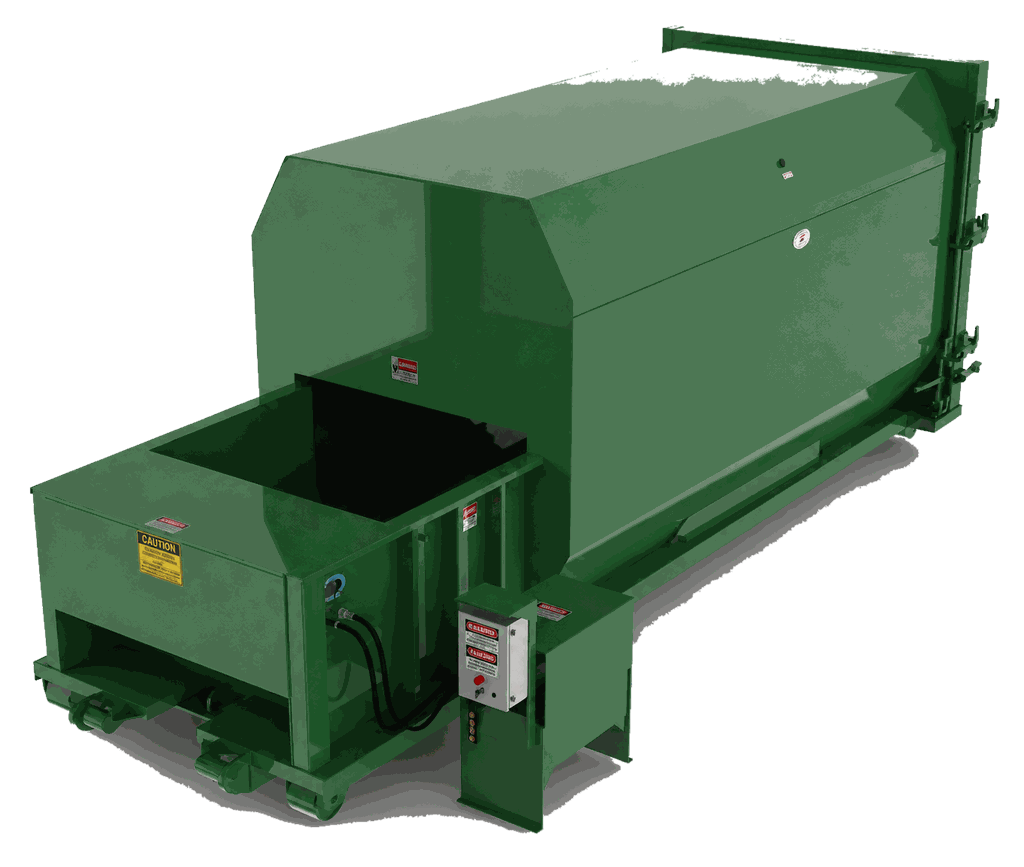
The compactor and the container are one sealed unit. Waste goes in, gets compacted, and stays inside the same body until the whole thing is hauled away and emptied.
Sealed means liquid tight. This is the one to use for wet waste and food waste, because nothing leaks onto the pad. Restaurants, grocery, hotels and anywhere with a kitchen.
Because the unit leaves site as one piece, it needs clear truck access and room to be lifted.
Stationary Compactors
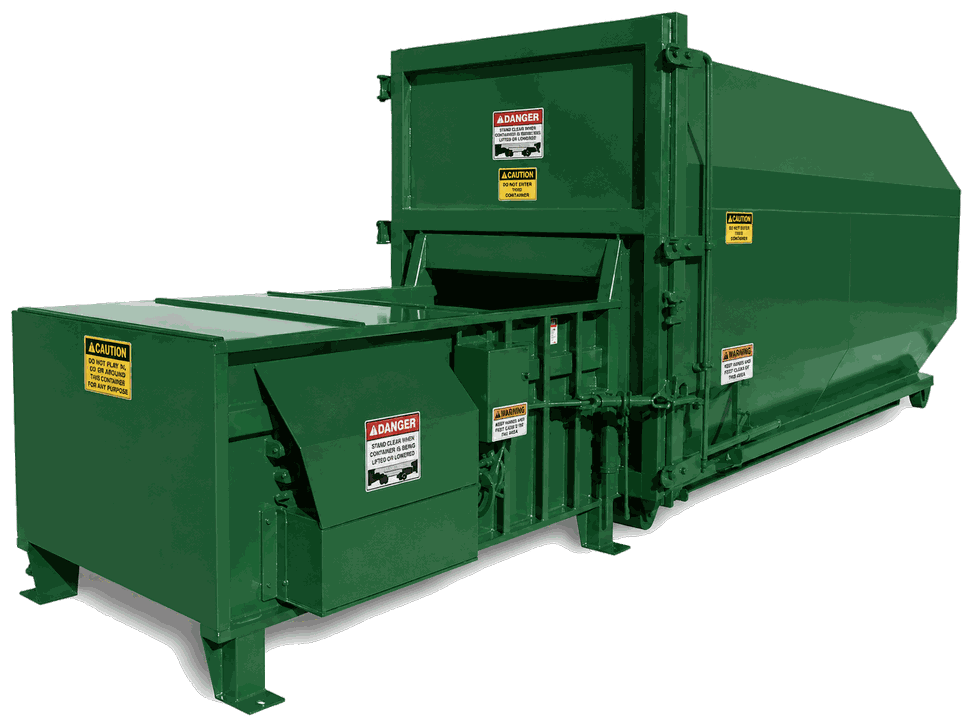
Two parts instead of one. A small charge box sits where your staff throw waste in, and it compacts that waste out into a separate receiver box parked behind it.
Only the receiver box leaves. When it is full a truck takes it, empties it and brings it back, and the charge box stays bolted where it is.
This is the dry waste setup. Cardboard, packaging, general trash from a warehouse, retail back room or distribution floor.
Which One You Need
Start with what the waste is. Wet or food waste goes in a self-contained unit, because it has to be liquid tight. Dry waste goes in a stationary unit, which costs less to run and takes up less room at the point where staff use it.
Then look at the space. A stationary setup needs room for the charge box and the receiver box behind it. A self-contained unit is one footprint but needs the truck to reach it.
Then the volume. There is a point below which a compactor does not pay for itself and a bigger container on a better schedule is the cheaper answer. We will tell you if that is where you are.
There are also vertical compactors, which compress downward and fit where a horizontal unit will not. Ask us if the space is tight.
Compactor Service and Repair
A compactor is a hydraulic machine that runs every day, and when it stops your waste backs up inside the building. We service and repair them.
That covers the units we supply and units already on site when we take an account over. If yours is down, call us.
Buying One or Having Us Arrange It
We sell compactors outright. If you would rather own the machine, we will spec it to the waste you actually produce and the space you have.
Or we arrange it as part of your service. The unit goes in, the hauling is set up around it, and it sits on one account with the rest of your waste and recycling.
Which is cheaper depends on how long you will be in the building and how much you are producing. Tell us both and we will work it through with you.
Frequently Asked Questions
A self-contained unit is one sealed piece and the whole thing is hauled away to be emptied, which makes it the one for wet and food waste. A stationary unit has a charge box that stays bolted down and compacts into a separate receiver box, and only that box leaves. Stationary is for dry waste.
Below a certain volume a bigger container on a better schedule is cheaper than a compactor. We will look at what you produce and tell you which one it is, including when the answer is that you do not need one.
Both. We sell them outright, and we also place them as part of a managed waste and recycling account.
Yes. That includes units already on site when we take an account over.
Call us and we will get it looked at. A compactor that stops means waste backing up inside the building, so it does not wait.
Talk to Us About a Compactor
Tell us what you throw out, how much of it, and what space you have. We will tell you whether a compactor pays for itself.